
Teaching & Learning Innovation 🧑🏫
I am the Associate Dean for Academic Strategy; an Associate Professor of Design Strategy at the USC Iovine and Young Academy.
The USC Jimmy Iovine and Andre “Dr. Dre” Young Academy is a school that brings together the arts, technology, and business in order to address real-world challenges. There, my teaching focuses on design-driven innovation in both client-facing and entrepreneurial contexts. Since joining the Academy in 2017, I’ve taught 24 different undergraduate and graduate-level courses. As Associate Dean, I co-lead curriculum design and delivery across all degree programs.
“Matthew Manos is absolutely my favorite professor at USC. His unique teaching methods are geared towards helping you get your ideas on paper and refining them, but in a way that is fun, fluid, satisfying, and effective.”
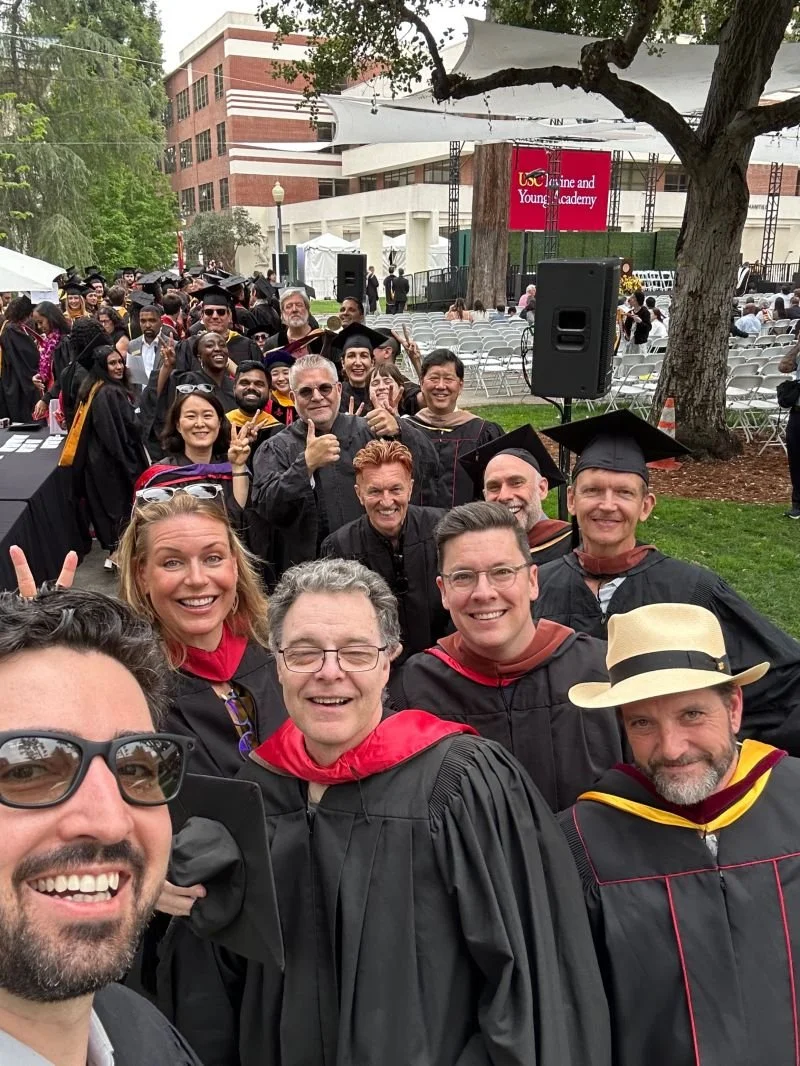
Challenge-Based Learning:
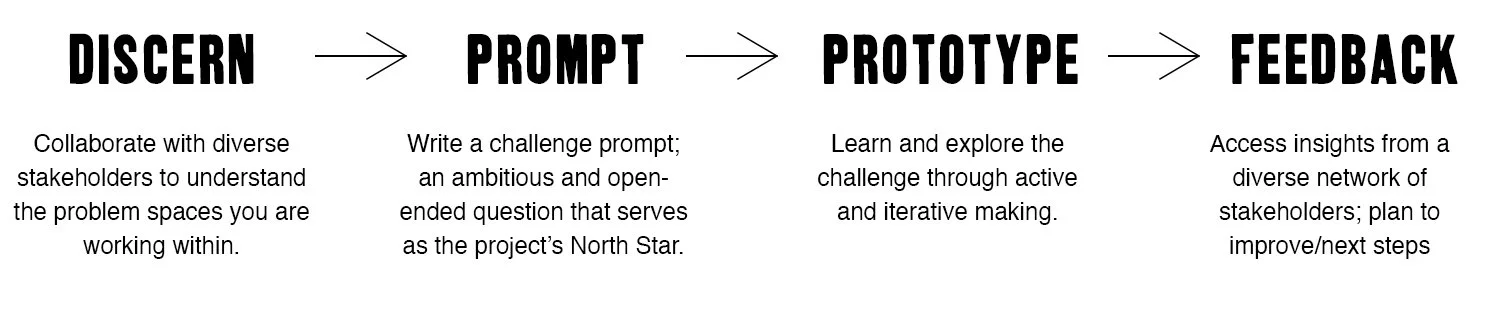
Through my various leadership positions at the Academy, I’ve helped develop and codify the school’s learning model. Learning at the Academy is applied, hands-on, and adaptable to the needs of industry. Through a unique blend of challenge prompts, Academy students and faculty work together to respond to complex problems facing individuals, communities, organizations, and societies at large. To accomplish this, students work in and out, back and forth through these series of stages for innovation:
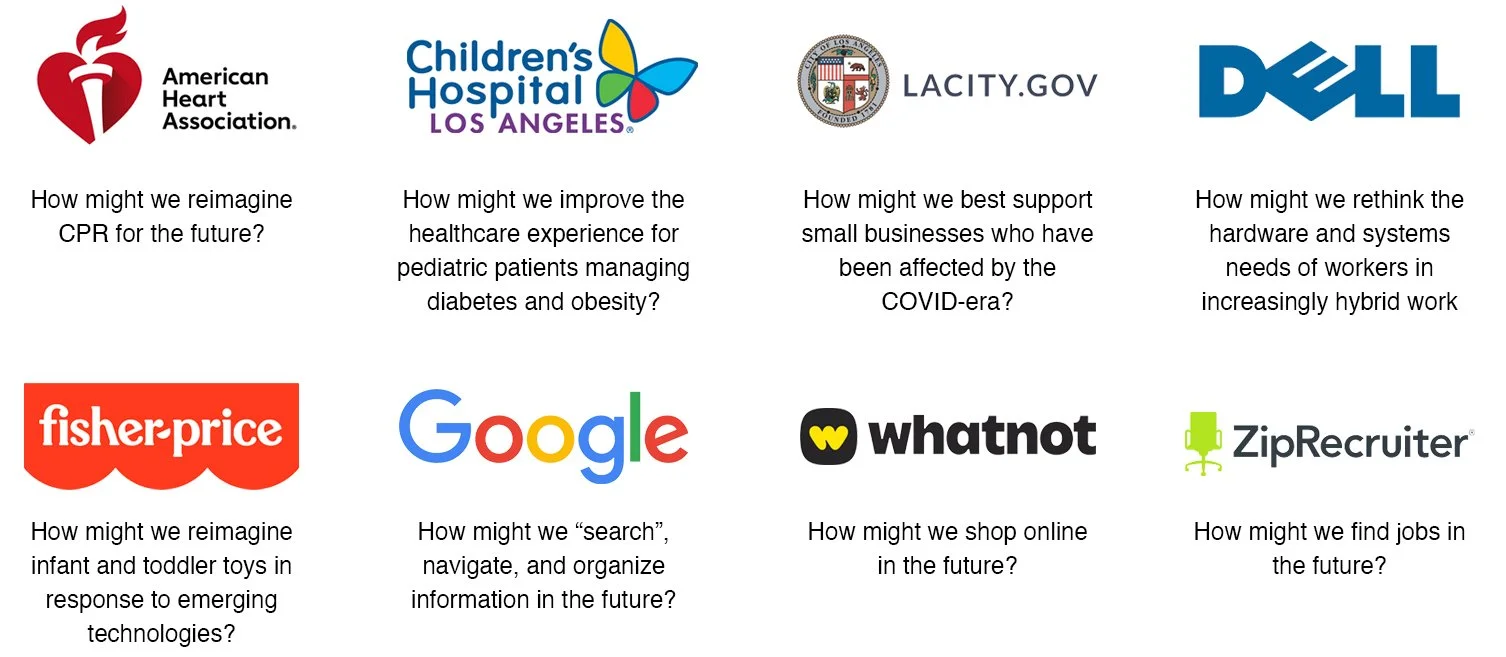
Fueled by this learning model, students work with faculty and industry guests to tackle challenges in semester-long courses, weekend hackathons, and multi-week sprints. Sample challenge prompts have included the following:
Iovine and Young Center:
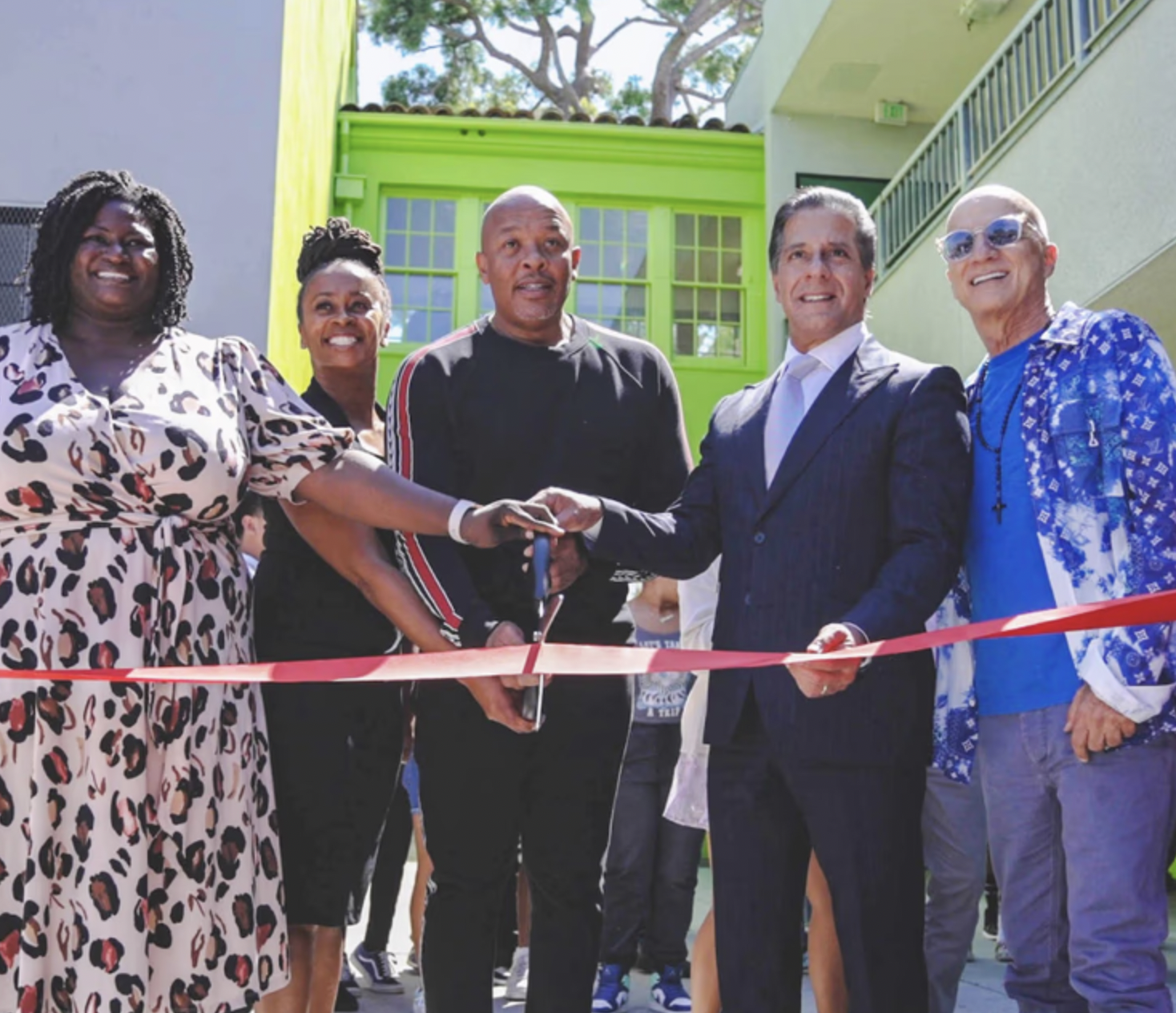
In 2022, Jimmy Iovine and Dr. Dre launched the Iovine and Young Center, a public high school that emphasizes discovery, creative problem solving, critical thinking, and real-world, challenge-based opportunities with leading industry partners.
Leading up to the flagship school’s launch within the Los Angeles Unified School District, I led an interdisciplinary team of students and faculty at USC in order to develop the four-year high school curriculum and student experience. Additional Iovine and Young Centers and related programs have since launched across California and the United States, including Atlanta, Inglewood, Miami, Denver, New York City, Charlotte, and Compton.
I continue to advise the Iovine and Young Education Group on K-12 curriculum design and teacher training for new schools, course pathways, and after-school programs
Past Academic Appointments:
California College of the Arts (Adjunct Professor; 2014-2017)
While at CCA, I developed curriculum for the first course dedicated to the practice of Social Entrepreneurship in the Design Strategy MBA program. The course focused on business model design and also provided students with a historical overview of the field. Next, with Jake Dunagan, I co-taught an MBA course on Strategic Foresight. The course focused on scenario planning using various futures methodologies including the Three Horizons framework, Alternative Futures, Causal Layered Analysis, and more.
ArtCenter College of Design (2010-2017)
Over the course of my career at ArtCenter, I had the privilege of working with hundreds of graduate and undergraduate students across 10 departments as a Graduate Teaching Assistant (2010-2012), Guest Lecturer (2012-2014), and Adjunct Faculty Member (2014-2017). My courses and lectures focused on topics including the business of design, design research, graphic design, social media, entrepreneurship, and career development.
Strelka Institute (Curator & Teacher; 2015-2017)
With Strelka, I developed an online course that aimed to grow the social enterprise movement in Russia. In February of 2016, I traveled to Moscow to film the course, give a public lecture and workshop, and advise students on their graduate projects. After the initial trip, I continued to work with the team at Vector to advise them on topics related to the course curriculum as well as new tools and resources for social entrepreneurs in Moscow. In April of 2017, thanks to Strelka, I returned to Russia to deliver a speech on Social Enterprise and Impact-Driven Branding for the American Embassy in Moscow, and to lead an additional workshop at Strelka. In addition, I traveled to the City of Saratov to give a lecture in a former soviet propaganda theatre on socially responsible business for community members, and students from Turkey, Kazakhstan, and Russia.
CalArts (Visiting Lecturer; 2016-2017)
As a Visiting Lecturer at Cal Arts, my focus was on the development of entrepreneurial content and programming for the Graphic Design department, and its alumni. Over the course of the 2016-2017 academic year, I lead a series of business-design workshops centered around a wide range of interests and topics that include Social Impact, Emerging Technologies, and Life on Mars. Each workshop introduced students to a series of tools leveraged for business ideation, modeling, and planning.

UCLA (Lecturer; 2012-2014)
While at UCLA Design Media Arts, I designed & led an undergraduate elective course in the School of Arts & Architecture titled "Designing Entrepreneurship". Having launched my own company within the campus of UCLA, my goal was to teach the class I wish I could have taken. The course provided students with a set of hands-on, radical approaches to innovation, entrepreneurship, and the design of business. We explored historical, contemporary, and emerging perspectives on the field of entrepreneurship, in order to provide a basis for students to invent their own methodologies. Students engaged with a series of experimental models for generating innovative business that gave them practical skills to become successful self-starters upon graduation. The class culminated in a final project in which each student wrote a business plan and developed a prototype.